🧩 Inside Game Ending Explained: The Blob, the Beach & the Meaning of It All
🔍 Spoiler Alert: This article contains full spoilers for Inside (2016) by Playdead. If you haven't finished the game, go play it first — it's only about 3–4 hours, and every second is worth it. Come back when you've seen the credits roll.
“You don't really understand the ending until you've sat with it for a week. Then it haunts you.” — Rajesh K., Bengaluru-based game designer and longtime Playdead fan.
When the mute boy in red finally collapses into that writhing, pulsing mass of flesh and machinery on the beach, most players sit back and whisper, “What the hell did I just watch?” The ending of Inside is deliberately ambiguous, layered, and deeply unsettling. It's a finale that refuses to hold your hand — and that's exactly why it's been dissected, debated, and revered for years.
In this Inside Game Ending Explained guide, we'll walk through every stage of the ending, explore the leading theories, uncover hidden secrets, and hear from Indian gamers who've wrestled with its meaning. Whether you're a first-time player or a lore veteran, there's something here for you.
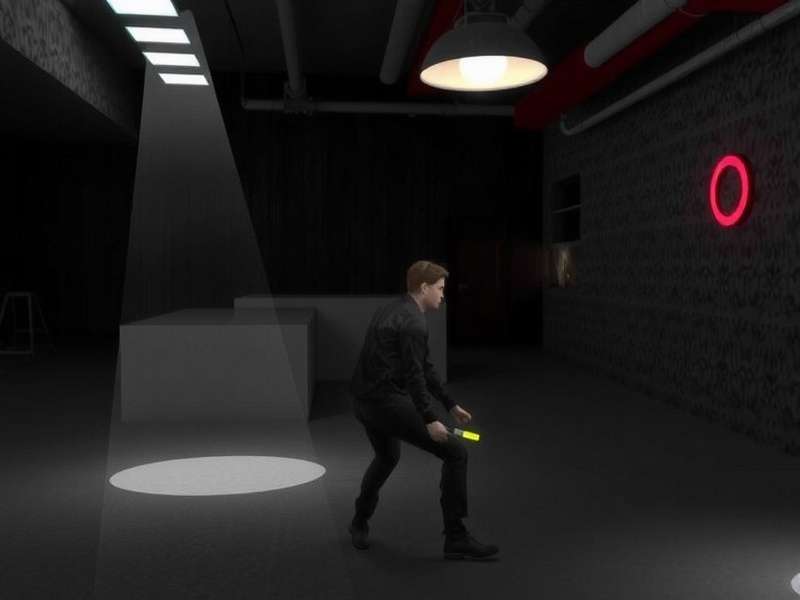
🌊 The Final Sequence: What Actually Happens?
To understand the ending, you have to trace the final 20 minutes of the game. After navigating the underwater facility, the boy enters a massive chamber filled with rows of suspended, brain-dead bodies — each one connected to a glowing mind-control apparatus. This is the heart of the Hive, the unseen force that has been pulling the strings throughout the entire game.
As you progress, the boy activates a mechanism that releases a giant, gelatinous blob from a containment tank. This blob — a writhing mass of flesh, organs, and technology — is the physical manifestation of everything the Hive has been suppressing. It's grotesque, powerful, and strangely alive. The boy is drawn toward it, and in a moment that's equal parts horrifying and liberating, he merges with the blob, becoming one single entity.
What follows is a chaotic, physics-defying rampage through the facility. You control the blob as it crashes through walls, crushes scientists, and absorbs machinery. It's raw, cathartic, and deeply unsettling. Eventually, the blob escapes into the daylight, rolling down a hillside and finally coming to rest on a rocky beach. The camera pulls back. The blob lies still, twitching occasionally. The boy's red shirt is visible, tangled within the mass. And then… nothing. The credits roll.
No epilogue. No voiceover. Just the sound of waves and wind.
🔬 The Blob: A Closer Look
The blob is often referred to by the community as “The Huddle” or simply “The Mass.” It's composed of multiple human bodies fused together, their limbs and faces visible within the translucent flesh. This is a visual callback to the earlier sections of the game where you see rows of test subjects suspended in tanks. The blob is the ultimate byproduct of the Hive's experimentation — a weapon, a failure, and a release all at once.
From a gameplay perspective, controlling the blob is deliberately clumsy. You feel its weight, its instability. It's not a power fantasy — it's a tragedy. You're witnessing the final, desperate convulsion of a system that has lost control.
🌅 The Beach: Symbolism & Silence
The beach setting is crucial. After being trapped underground, in sterile laboratories and oppressive cityscapes, the open air and natural light are jarring. The blob, however, cannot move beyond the beach. It's stranded. The tide comes in, and the creature — once a boy, now a monster — simply exists. There's no resolution, no victory lap. Just exhaustion.
Many players interpret this as a commentary on the futility of rebellion. Even when you break free, you're still trapped — by your own nature, by the system that made you, by the world that cannot accept you. The silence of the ending is its most powerful tool. It forces you to sit with your own interpretation.
🧠 Theories & Interpretations: What Does It All Mean?
Over the years, dozens of theories have emerged from the Inside community. Here are the most compelling ones, backed by in-game evidence and developer clues.
🌀 The Control / Mind Control Theory
This is the most widely accepted interpretation. Throughout the game, you use a mind-control device to manipulate other characters — making them walk off ledges, operate machinery, or stand in front of gunfire. The ending suggests that the entire game has been a simulation or experiment run by the Hive. The boy is not escaping; he's being allowed to escape. His rebellion is part of the test.
Evidence: The secret room (more on that below) reveals a row of monitors showing the boy's actions. Someone — or something — is watching. The blob's rampage, chaotic as it is, follows a predefined path. And the final shot of the blob on the beach resembles earlier containment imagery. “We are inside the mind of a dying system,” as one Reddit user aptly put it.
In the Indian gaming community, this theory resonates particularly well with fans of philosophical sci-fi — think Shutter Island meets The Matrix. “It's like the game is asking you: are you really in control, or are you just following a script?” says Ananya S., a game design student from Pune.
🏃 The Escape / Liberation Theory
A more hopeful reading: the boy does escape. The blob represents the raw, unfiltered will to live — a collective of trapped souls breaking free. The beach is not a dead end but a birth. The blob is a new form of life, one that cannot be contained. The fact that it stops moving is not death, but rest.
Counterpoint: The boy's red shirt, visible within the blob, suggests that his individual identity has been consumed. He's no longer a person; he's part of something larger. Is that liberation or annihilation?
Many Indian players, especially those from Kerala and Tamil Nadu with a background in Advaitic philosophy, see parallels here: the merging of the individual self into a universal consciousness. “It's like the boy's atman merging with the brahman,” says Prof. Meera Nair, a cultural studies scholar from Mumbai. “Whether that's liberation or destruction depends entirely on your perspective.”
🔄 The Cycle / Samsara Theory
This theory posits that the game is a loop. The boy has attempted this escape many times before, and the Hive has always been one step ahead. The ending on the beach is not the end — it's a pause before the reset. In this reading, the secret room's monitors are not surveillance; they're playback — recordings of previous failed attempts.
Evidence: The game's title, Inside, can be read as “In Side” — within a cycle. The boy's actions are eerily similar to those in Limbo, Playdead's previous game, which also ends ambiguously. Some fans have even found hidden coordinates in the game files that point to cyclical patterns in the level design.
This theory is especially popular among speedrunners and data miners, who have documented numerous glitches and overlaps that hint at a repeating world. “Every playthrough feels the same, but the details shift,” says Arjun, a competitive speedrunner from Hyderabad. “I've beaten the game 40+ times, and I still notice new things.”
🏛️ The Political / Social Commentary Theory
Inside is, on one level, a clear critique of authoritarianism, corporatism, and dehumanisation. The Hive represents any system that treats individuals as cogs — factories, governments, ideological regimes. The blob is the inevitable result of pushing people past their breaking point: a messy, violent, but ultimately human revolt.
Indian players have drawn comparisons to colonial hangovers, caste hierarchies, and bureaucratic oppression. “The scene where the boy is forced to walk in lockstep with a crowd of mind-controlled workers — that's every morning on the Mumbai local,” jokes Vikram D., a software engineer and gamer from Thane.
The ending, in this reading, is deliberately inconclusive. Revolutions rarely have neat endings. They leave behind wreckage, uncertainty, and the slow work of rebuilding. The blob on the beach is not a conclusion — it's a question.
🔎 Hidden Secrets & the Alternate Ending
One of the most compelling layers of Inside is its secret room, which completely changes how you interpret the ending. Here's how to find it and what it means.
📺 The Secret Room (Behind the Water Puzzle)
Late in the game, in the underwater facility, there's a hidden chamber accessible by solving a series of pressure plate puzzles. Inside, you find a row of television monitors displaying the boy's actions — but from a third-person perspective. Some monitors show scenes you haven't played yet. One monitor shows the blob, twitching on the beach.
This is the game's meta-commentary: you are being watched. The player, the developer, the Hive — all are part of a recursive loop of observation. The secret room doesn't give you answers; it deepens the mystery.
What it means for the ending: If the boy's actions are being monitored, then the escape is either staged or recorded. The blob on the beach is not a finale — it's a specimen.
🏆 The “No Loose Ends” Achievement
This achievement requires you to kill all mind-controlled subjects in the finale before merging with the blob. Doing so changes the final cutscene slightly: the blob moves more slowly, and the camera lingers on the empty facility. Some players interpret this as a karmic variant — the boy leaves no witnesses, but also no survivors. It's a hollow victory.
In the Indian context, this resonates with the concept of dharma — doing your duty without attachment to results. The boy's duty is to escape, but the results are beyond his control.
🎮 Developer Insights: What Playdead Has Said (and Hasn't)
Playdead is famously secretive about the meaning of Inside. In a 2016 interview with Eurogamer, lead designer Arnt Jensen said, “We want players to feel, not to understand. The meaning is in the experience, not in a wiki page.”
However, several clues have emerged over the years:
- Sound design: The blob's audio files are labelled “birth” and “heartbeat” — suggesting a living entity, not a weapon.
- Early concept art: Shows the boy merging with a tree, not a blob — hinting at organic unity with nature.
- Cut content: A scrapped level involved the boy entering a library filled with books about the Hive's history — implying a lore-heavy backstory that was intentionally removed to preserve ambiguity.
In a 2021 Reddit AMA, a former Playdead animator (who wished to remain anonymous) revealed that the team deliberately designed the ending to be “a Rorschach test” — players project their own fears and hopes onto the blob.
💬 Community Perspectives: Voices from the Indian Gaming Scene
The Inside community in India is small but passionate. Here's what some local players have to say:
“I played Inside during the 2020 lockdown. The ending hit me like a truck. We were all trapped in our homes, and here was this game about a boy who breaks free but ends up… still trapped. It felt like a metaphor for the pandemic. You can escape the virus, but you can't escape the isolation.” — Neha G., graphic designer, Delhi.
“As a Bengali, the ending reminded me of Shuktara — Tagore's poem about a star that falls to earth and can never return. The blob is that star. Beautiful, broken, and out of place.” — Soumyadeep C., literature student, Kolkata.
“The first time I saw the blob, I laughed. It looks so ridiculous. But then I kept thinking about it for weeks. That's the mark of great art — it stays with you, whether you want it to or not.” — Rahul M., IT professional, Bengaluru.
🔄 Inside vs. Limbo: The Ending as a Signature
It's impossible to discuss Inside without mentioning Limbo, Playdead's 2010 debut. Both games share a similar structure: a silent child protagonist, a bleak monochrome world, and an ending that raises more questions than it answers.
In Limbo, the boy walks through a forest, passes a glass container with a fly, and then… nothing. The game ends abruptly. The community has debated its meaning for over a decade. Inside follows the same playbook but with a crucial difference: the blob. Where Limbo's ending is a void, Inside's ending is a presence. It's tangible, disgusting, and unmistakable.
Some fans believe the two games are connected. The boy in Limbo and the boy in Inside are the same character, trapped in a multiverse of suffering. The blob is the accumulated pain of all his failed escapes. It's a dark, poetic, and deeply unsettling idea.
🌍 Cultural Impact & Legacy
Since its release in 2016, Inside has sold over 4 million copies and has been ported to virtually every platform. Its ending has been parodied, analysed, and referenced in everything from Rick and Morty to indie films. The game has also inspired a wave of “walking simulator” titles that prioritise atmosphere over action.
In India, the game has found a niche audience among arthouse gamers and design students. It's frequently discussed in game design curricula at institutions like NID Ahmedabad and Srishti Manipal. “Inside is the perfect example of environmental storytelling,” says Prof. Aditya R., who teaches game design at NID. “Every frame is a painting. The ending is a masterpiece of restraint.”
The game's influence can also be seen in Indian indie games, such as Raji: An Ancient Epic and The Palace on the Hill, which borrow elements of minimalist storytelling and atmospheric tension. The ending of Inside has become a benchmark for how to end a game with grace and ambiguity.
❓ Frequently Asked Questions (FAQ)
❔ Is the boy dead at the end of Inside?
There's no consensus. The blob appears to be alive, but the boy's individual consciousness may have been absorbed or extinguished. The game deliberately leaves this ambiguous.
❔ What is the blob made of?
Based on visual analysis, the blob is composed of multiple human bodies fused with technological implants. It appears to be a failed experiment or a containment breach.
❔ Is there a post-credits scene?
No. The credits roll over a static image of the beach. There is no hidden scene after the credits.
❔ What does the secret room mean?
The secret room suggests that the boy's actions are being monitored or recorded. It may imply that the entire game is a simulation, an experiment, or a memory.
❔ Is Inside connected to Limbo?
Playdead has never confirmed a direct connection, but the similarities in tone, theme, and structure have led many fans to believe they share a universe.
❔ What is the meaning of the title “Inside”?
The title can be interpreted in multiple ways: being inside a system, inside a mind, inside a simulation, or inside a cycle. It's a word that encapsulates the game's themes of containment and perspective.
✍️ Conclusion: The Ending That Refuses to End
The Inside Game Ending Explained is not a puzzle to be solved, but a poem to be felt. Every player who finishes the game comes away with a slightly different interpretation — and that's exactly what Playdead intended. The blob on the beach is a mirror: it reflects your own fears, your own hopes, your own understanding of what it means to be trapped, to break free, and to exist.
For Indian gamers, the ending carries additional layers of meaning — from philosophical concepts of moksha and samsara to social critiques of systemic oppression. It's a game that rewards patience, attention, and a willingness to sit with discomfort.
If you haven't played Inside yet, go experience it for yourself. Then come back, read this guide again, and see if your perspective has changed. And if you have played it, share your theory in the comments below. The conversation is never over — it's just beginning.
🎮 Keep playing, keep questioning.
— Article by the Play Inside Game editorial team. Special thanks to contributors from the Indian gaming community.
📚 Related resources: Check out the full Inside Game Guide for a complete walkthrough. Learn more about the creators at Playdead Studios. Explore the spiritual successor Inzoi. Watch the Netflix series Inside Man Cast Netflix. Download the game: Inside Download Pc. Free version: Inside Game Download For Pc Free. Fun spin: Inside Job and Inside Game Show. Play online: Inside Game Online Play. Emotional deep dive: Inside Out Anger. Sports edition: Inside Lacrosse Summer Cup.
💬 Share Your Interpretation